
When you are deep in the trenches of parenting—juggling school runs, work deadlines, and endless laundry—your finances can quickly descend into chaos. A few weeks of convenience spending, forgotten subscriptions, and "emergency" swipes of the credit card can lead to a messy bank statement and a heavy feeling of being out of control.
In the Lab, we know that a full financial overhaul is too much for a tired parent to handle. Instead, we recommend the One-Week Reset. This is a low-energy, high-impact plan to reclaim your financial peace in just seven days, focusing on one small task at a time.
The Paper Trail
10 MinutesThe goal today is not to crunch numbers, but to eliminate the "fear of the unknown." Gather every physical bill, school circular, and unopened bank letter. If your trail is digital, flag every financial email from the last 30 days. Put them in one folder. By simply seeing the boundaries of your financial life, you reduce the anxiety that comes from "hidden" obligations.
The Subscription Strike
15 MinutesModern family budgets often bleed out through UPI mandates and "set-it-and-forget-it" credit card charges. Open your banking app and scan your standing instructions. Identify three recurring charges you haven't gained value from in the last month—perhaps a streaming service no one watches or a "premium" app your child outgrew. Cancel them. This is instant "found money."
The Pantry Inventory
20 MinutesBefore you place your next grocery or quick-delivery order, look at the back of your shelves. Most families have enough dry goods, lentils, and frozen items to create three days of "free" meals. Design a simple "Pantry Menu" to skip a mid-week grocery run. This prevents the ₹1,000 "convenience surge" that happens when we shop without a plan.

A well-organized pantry reveals meals you forgot you had.
The Reset Tracker
5 MinutesVisibility is the best cure for financial stress. Use the tool below to see exactly where your balance stands after your first three days of small wins.
Your Reset Progress
0 of 7 days completed
Click each day to mark it complete as you progress through your reset week.
The "FML" Reflection
10 MinutesIdentify one spending moment from the last month that made you feel stressed afterward. Was it a late-night Amazon spree? A third consecutive night of expensive takeout? Don't judge the purchase; just name the pattern. Understanding the "Parenting Trigger" (like exhaustion or guilt) that leads to the spend is the only way to design a better habit.
The Calendar Sync
15 MinutesLook at the next 14 days. Are there any birthdays, doctor appointments, or school "color days"? Mark them on your calendar now. Most "emergencies" are actually just events we forgot to plan for. Seeing them coming allows you to allocate funds from your Flexible Bucket ahead of time.
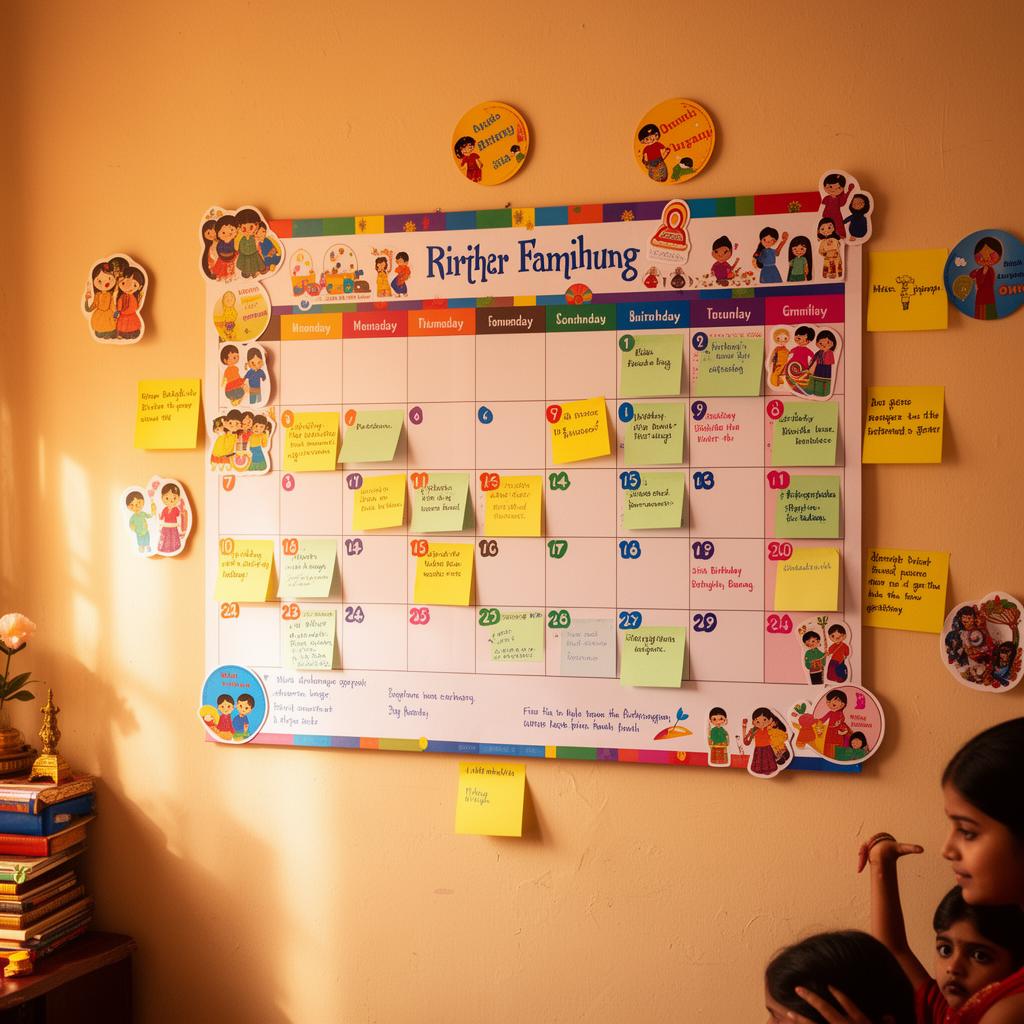
A visible calendar turns "emergencies" into planned expenses.
The Automation Audit
10 MinutesFinally, ensure your "Future Family" bucket transfers are scheduled for your next payday. Automation is the tired parent's best friend. It makes the "right" decision for you when you are too exhausted to think. When your savings happen automatically, you can spend the rest of your budget guilt-free.
Real Family Money Lesson: The "Zero Spend" Weekend
"We were so burnt out that we were spending ₹5,000 every weekend just on 'getting out of the house' and eating out to avoid cleaning. During our reset week, we committed to a 'Park and Picnic' Saturday. We realized the kids had just as much fun, and we ended the weekend feeling rested instead of broke."
— A couple from our community
Continue Your Journey
This article is a core part of our Family Budgeting Made Simple guide. A reset isn't about perfection; it's about clearing the path for long-term growth. Explore our full guide on Family Budgeting.
Read the Family Budgeting GuideThe FML Team
Written by a parent focused on building calm, practical money systems for families. Content is based on real-life experience, research, and behavioural finance principles.
Learn more about us →Disclaimer: This content is educational and based on personal experience. It is not financial advice. Please consult a qualified professional for your specific situation.